




Commercial roof problems rarely start as major failures. More often, they start with a loose seam, blocked drain, damaged flashing, or small puncture that worsens over time. Regular maintenance helps you catch those issues while they are still manageable.
This commercial roof maintenance checklist walks you through what to inspect, when to inspect it, and which problems need professional attention, with added guidance for Pittsburgh’s changing weather.
Key Takeaways
- Inspect your commercial roof at least twice a year, and after any major storm or heavy snow.
- Work through your roof by component (membrane, flashings, drainage, penetrations, and edges) rather than glancing at it randomly.
- Pittsburgh’s freeze-thaw cycles, snow load, and standing water are the local forces most likely to cause a roof leak, so plan accordingly.
- Document every inspection with photos and notes because most roofing warranties require proof of maintenance to remain valid.
- Routine visual checks can be done in-house, but warranty, insurance, and hidden-damage issues call for a professional roof assessment.
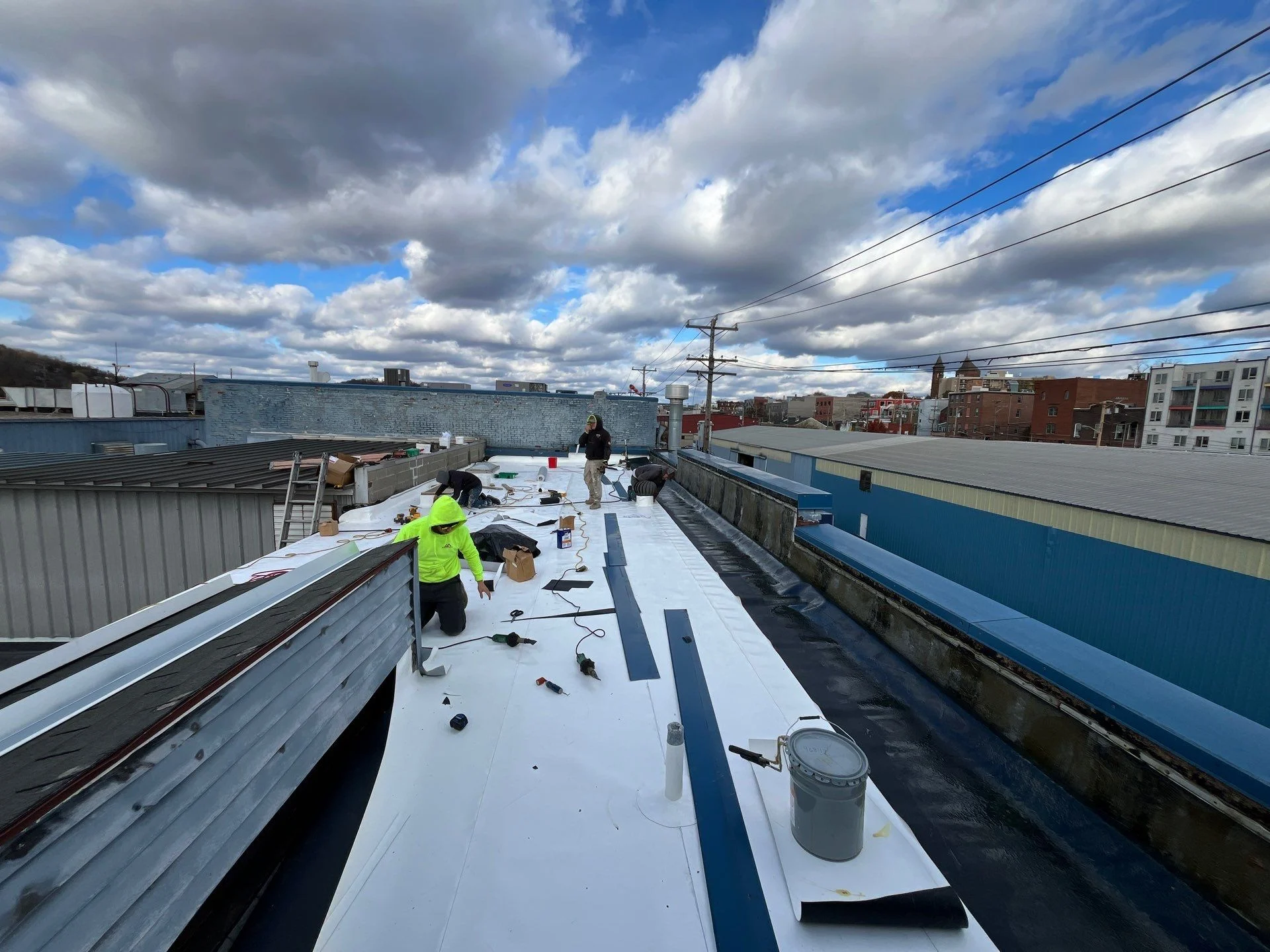
Your Commercial Roof Maintenance Routine at a Glance
Maintaining a commercial roof comes down to three things: scheduled inspections, a component-by-component checklist, and documentation you keep over time. Get those three working together and you have a roof maintenance program that’ll protect your roof and its warranty.
The National Roofing Contractors Association recommends biannual inspections, once in spring and once in fall. Spring inspections can uncover damage caused by winter snow, ice, and freeze-thaw cycles. Fall inspections help make sure the roof is ready for colder weather. It is also a good idea to schedule an extra inspection after severe storms, strong winds, hail, or heavy snowfall.
Treat this routine as your baseline and adjust it to your commercial building. For example, two inspections a year are enough for a newer roof in good condition, while an aging roof system (older than 15 years) or one with a history of roof problems warrants more frequent inspections.
The Commercial Roof Maintenance Checklist
Use the sections below as your field-ready commercial roof maintenance checklist, and log your findings each time so you can track roof conditions over the years.
Roof Surface and Membrane
Inspect the roof membrane first, since the surface reveals how quickly the roof is aging. Pittsburgh punishes membranes from both directions: summer UV and surface temperatures above 150°F make the material brittle, while winter cold forces it to contract.
Check for these warning signs:
- Cracks, splits, or punctures in the membrane
- Blisters or bubbling where the material has lifted
- Soft spots underfoot that may signal wet insulation below
- Dried-out, chalky, or brittle areas that crack easily
- Loose or shrinking material pulling away from the edges
Even minor surface roof damage can let water reach the insulation and decking, where it spreads unseen. A basic understanding of your commercial roof type helps read the signs better, since the systems most common on local commercial and industrial buildings (TPO and EPDM, two single-ply membrane materials, plus modified bitumen and metal) each wear differently.
Flashings, Seams, and Penetrations
Flashing is the metal or membrane material that seals the transitions where your roof meets walls, curbs, pipes, and equipment. Flashings are your highest-risk zone, because most commercial roof leaks originate at flashings.
Inspect each of these closely:
- Flashing at walls, curbs, and roof edges for lifting or separation
- Seams that are peeling, splitting, or pulling apart
- Failing or cracked sealant around every roof penetration
- Seals around vents, skylights, and pipe boots
- Rust or corrosion on metal flashing and fasteners
Pittsburgh’s repeated temperature swings worsen the problem by loosening metal edges and breaking down old sealant in a single season. If you find a failing seal, you should check every nearby penetration, because the same exposure usually affects them all.
Drainage System
Your drainage system is as critical as the membrane itself, especially on a flat roof.
Run through your drainage checklist:
- Internal drains and scuppers are clear of debris and leaves
- Gutters and downspouts are flowing freely and firmly attached
- No standing water lingering more than 48 hours after rain
- Drain covers and strainers in place and undamaged
- Drainage paths free of ponding before the first freeze
Standing water is a leading cause of membrane breakdown and imposes structural loads on the roof. The problem is more pressing in Pittsburgh, where you experience roughly 38 inches of rain and more than 40 inches of snow a year.
If you only prioritize one drainage task before winter, make it a full fall cleanout, since trapped water that freezes and refreezes can work its way under the membrane and cause leaks.
Rooftop Equipment and Foot Traffic
Rooftop equipment is easy to overlook from the ground, yet it is a common source of damage. Damage can occur due to various reasons. For example, vibrations from mechanical systems loosen fasteners over time or service technicians walking on the roof can puncture or wear the surface.
Check the equipment and traffic areas:
- HVAC units, mounts, and support framing are fastened securely
- Condensate lines draining away from the membrane, not onto it
- Seals intact where equipment penetrates the roof
- Walk pads in place along common service routes
- No scuffs, gouges, or worn paths from foot traffic
Before maintenance or service work begins, make sure the crews know which roof areas need extra care. Using designated walk paths and protecting the membrane around work areas can also reduce unnecessary wear and help prevent small surface damage from developing into leaks.
Roof Edges, Parapets, and Interior Signs
Finish your exterior inspection at the roof edges and parapets, where wind damage often shows up first. Then head inside your building and look for signs of moisture that may point to a problem you could not see from the roof.
Look for the following:
- Edge metal and coping lifting, loose, or wind-damaged
- Cracks or deterioration in parapet walls
- Stains or discoloration on top-floor ceilings and walls
- Peeling paint or mold near the roofline inside
- Any sign of past leaks logged but never repaired
Interior water stains matter as much as anything on the roof, because they are often the first visible sign of a leak that started months earlier. Photograph and log every finding so you can track patterns and document ongoing maintenance.
Seasonal Roof Care for Pittsburgh Weather
Once you know what to inspect, the next step is timing your roof maintenance around Pittsburgh’s weather. The region goes through roughly 30 to 40 freeze-thaw cycles each year, while wet, heavy snow can put additional stress on a commercial roof.
That is why spring and fall are the best times for routine inspections. Spring is the time to check for winter damage, while fall maintenance helps prepare the roof for colder weather ahead. Use the table below to plan maintenance around the conditions each season brings.
| Season | What Pittsburgh Throws at Your Roof | Priority Tasks |
|---|---|---|
| Spring (Mar–May) | Freeze-thaw cracking, snow-load stress, heavy rain | Assess winter damage, clear debris, check seams and flashing, test drainage |
| Summer (Jun–Aug) | UV exposure, 150°F+ surface heat, membrane expansion | Check for blistering and seam separation, inspect penetrations, and consider a reflective coating |
| Fall (Sep–Nov) | Falling leaves, incoming cold | Clear all drains and gutters, complete a pre-winter inspection, reseal loose edges |
| Winter (Dec–Feb) | Snow load, ice dams, freeze-thaw | Monitor accumulation, remove excess snow safely, and watch for thaw-period leaks |
Scheduling your roof care according to the calendar keeps you from scrambling. It also helps you protect your property before the worst weather arrives.
When to Handle It Yourself and When to Call a Professional Commercial Roof Contractor
Plenty of roof maintenance can stay in-house, and it should. Trained staff can and should conduct regular roof inspections using a standard inspection checklist, since consistent frequency is key to catching small issues early.
Call a professional roof contractor when the inspection is tied to a warranty, insurance claim, or hidden moisture problem. A roofing contractor can provide the documentation, testing, and repairs these situations may require.
Many warranties also require professional maintenance records, so keeping up with those inspections can help protect your coverage.
There is also a point where repair stops making sense. Industry guidance often references the “25% rule,” which means that once roughly a quarter of your roof is damaged or deteriorated, repairs may no longer be cost-effective and can affect remaining warranty coverage.
If your roof reaches that threshold, a professional assessment helps you decide between continued repairs and a planned roof replacement before structural damage spreads.
Frequently Asked Questions About Commercial Roof Maintenance
How often should I have my commercial roof professionally inspected in Pittsburgh?
You should schedule an inspection at least twice a year, ideally in spring and fall, plus after any major storm, hail, or heavy snow. Older roofs or those carrying heavy rooftop equipment may need quarterly checks.
What is the most common cause of commercial roof leaks?
Most roof leaks originate at flashings, seams, and penetrations. Every transition point where the membrane meets a wall, pipe, or curb is a potential entry point for water, so these areas deserve your closest attention.
Can my own staff inspect the roof, or do I need a commercial roof contractor?
Trained staff can perform routine visual checks using a checklist, which keeps your inspection frequency high. Professionals are needed for warranty compliance, insurance claims, and detecting hidden moisture that surface checks miss.
Will skipping roof maintenance void my roof warranty?
It can. Many commercial warranties require documented professional maintenance, so keep photos and written records of every inspection to protect your coverage.
Put Your Commercial Roof Maintenance Plan Into Action
Regular inspections and a consistent maintenance routine make it easier to catch small roof problems before they lead to leaks, damaged insulation, or more expensive repairs. Clear records also help you track changes over time and stay on top of warranty requirements.
If you need help inspecting or maintaining your commercial roof, schedule a free roof inspection with L&L Roofing. Our team can assess its condition, identify problem areas, and help you plan the next steps.
> Get a Free Inspection